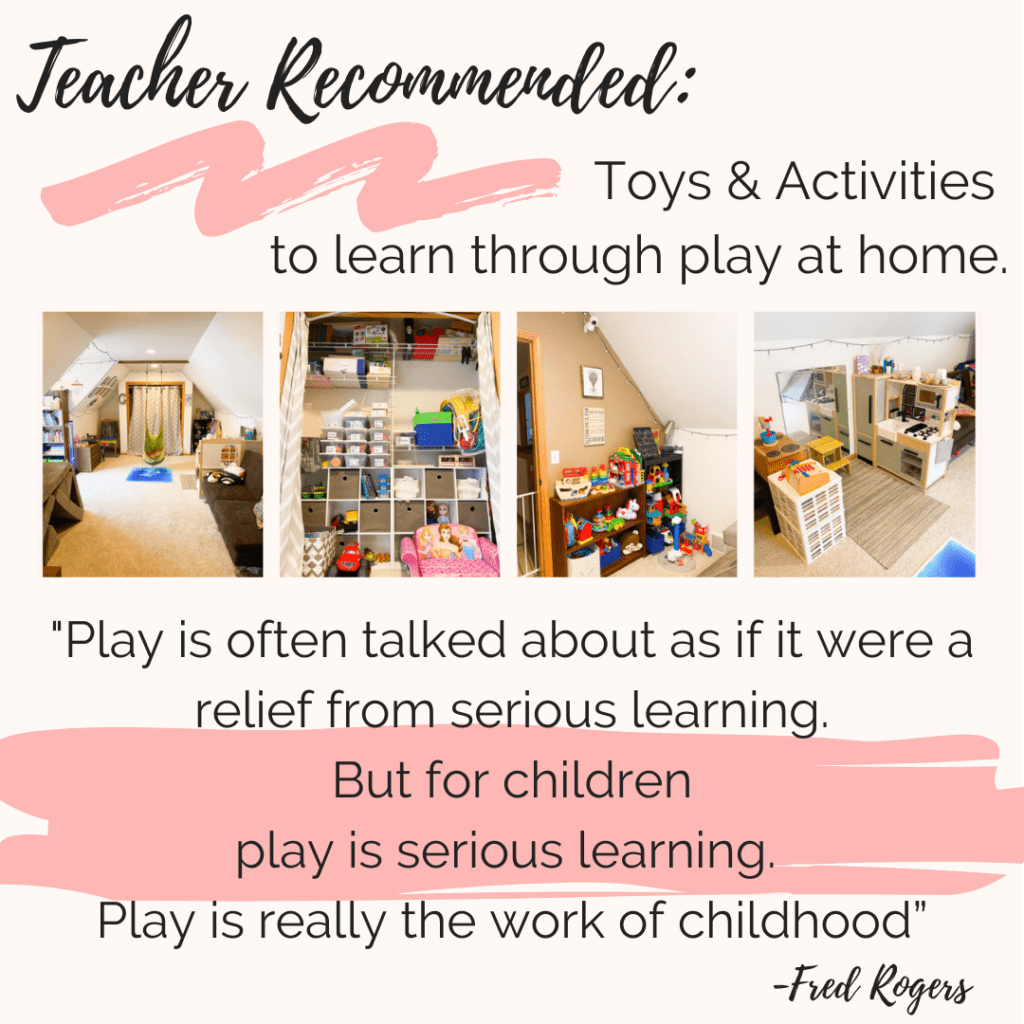
Toys & Activities to learn through play at home
I have a degree and license in early childhood. I taught early childhood for 6 years. Because of this experience I have collected a great deal of toys and activities that allow your children to learn through play. I have compiled my teacher recommended toys & activities for home learning.
When the pandemic first hit, I wrote POST on home learning while home for safer at home orders. It shares some activities and online resources, mainly due to the fact that school was in person and then went online.
This post focuses more on toys and activities you can incorporate into your home if you are home schooling or just searching for ways to make your time together more educational.
A large portion of making learning toys into learning activities is questioning and conversing with the child. Ask them leading questions to get them thinking “what piece should we start with?”, ask them what they just did and why “Why did you put that piece there?”, ask them for more details about that piece, “yes that is six. What did you just count 6 of? What color is that ___. Have you ever seen one of those?” By question and conversing it allows you to get to know their thought process, they get practice explaining their thinking, it makes the thought process use more areas of the brain, it works on communication and social skills, and it makes it personal.
I am structuring the activities in the way that my current inclusive playroom and former classrooms were set up: into centers. You do not have to have a room for this, you do not need to “switch centers” or anything else. This is just a way I personally organize my toys and thoughts.

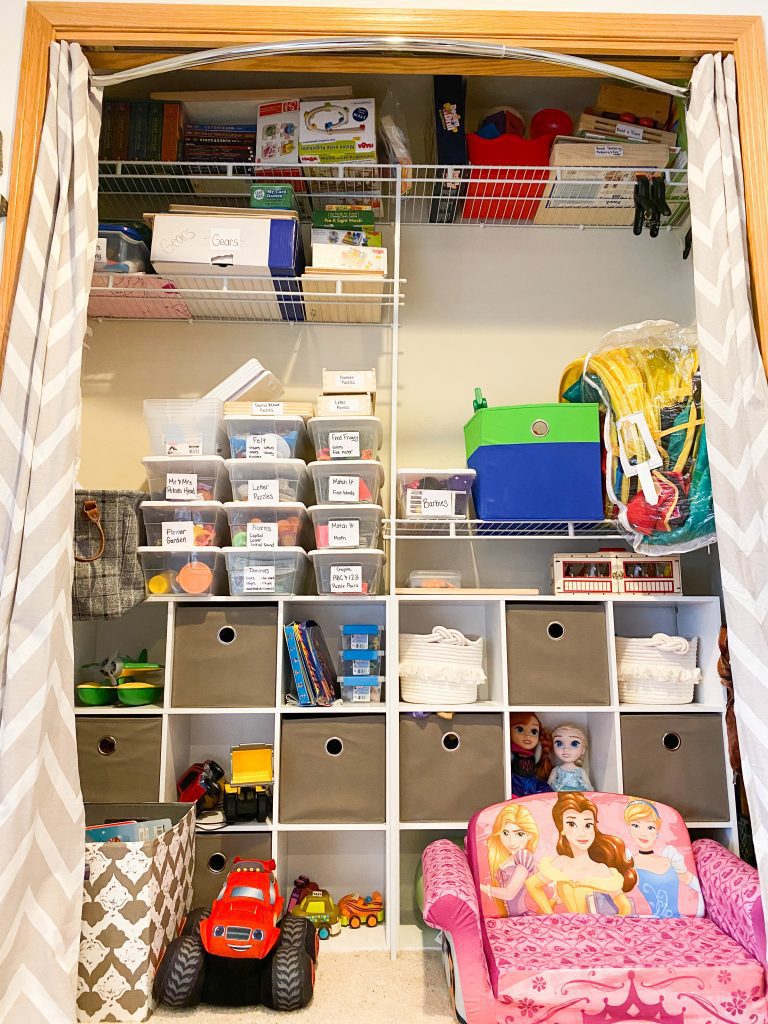
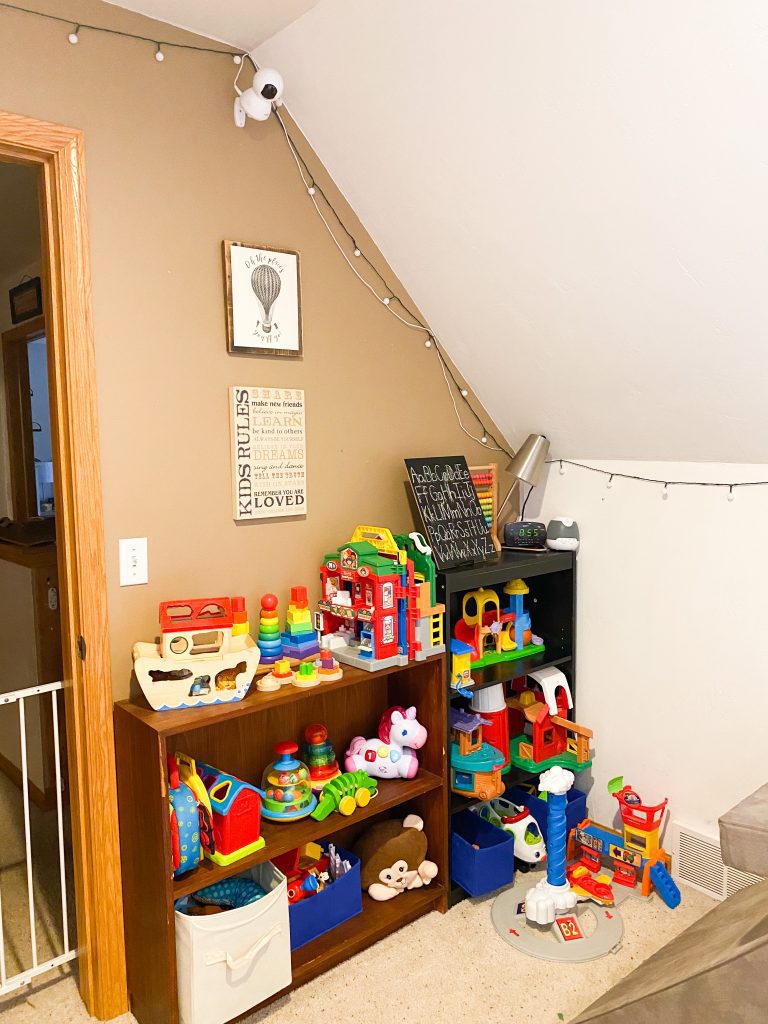
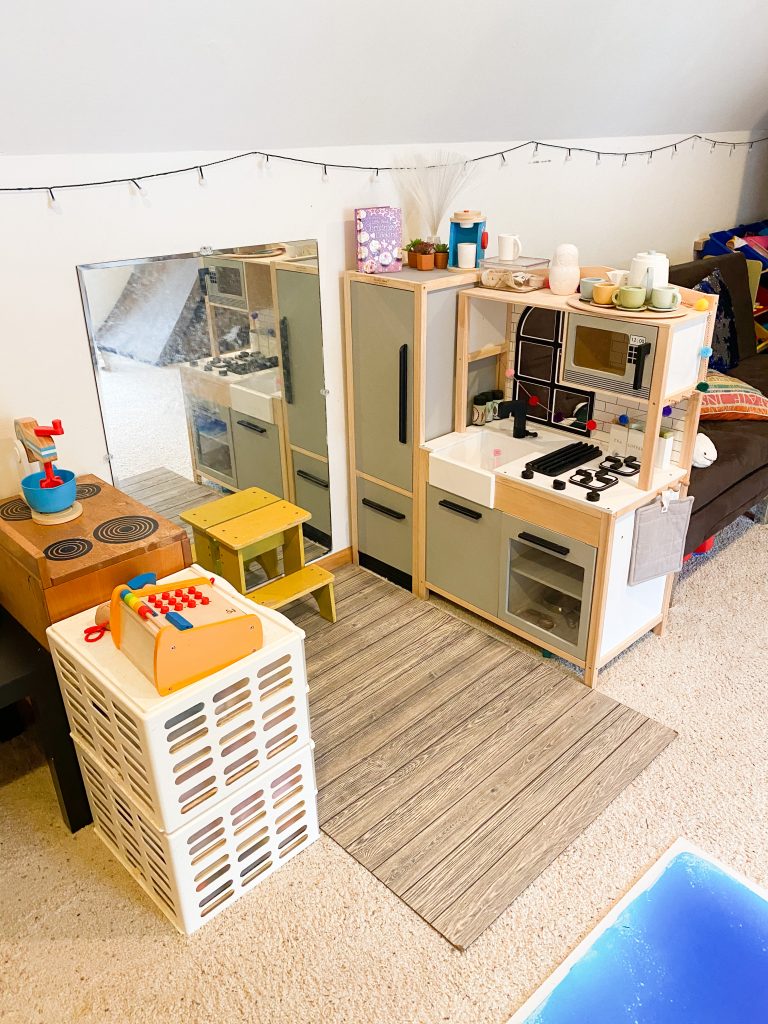
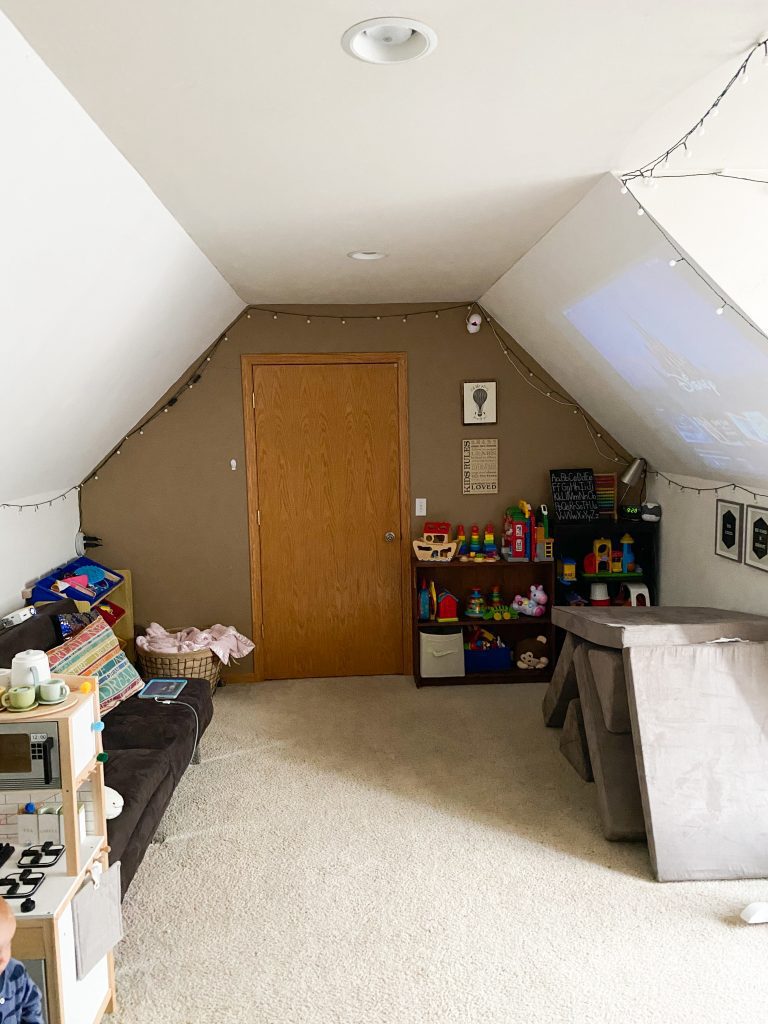
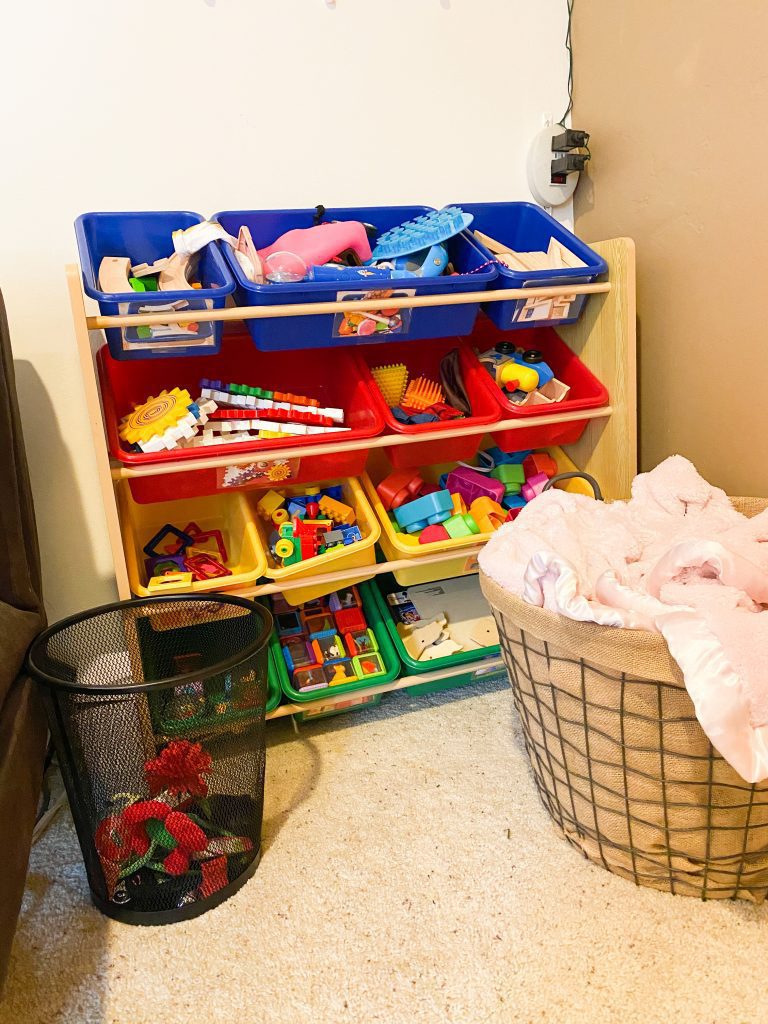


I would also like to note that while I have purchased many of these for my children, I had many of them from my teaching days (I purchased them then too) but I did not purchase all at once, you do not need them all. You can do the same activity with some toys, I just have a variety to match classroom themes as well as meet a class of students needs vs one or a few children at home.
{MOST} links are affiliate links. I earn a small percent based on your sales at no extra cost to you. Your support of using my links when I take the time to collect and share the links is greatly appreciated. Many of these items can also be found in my Amazon Storefront in Preschool Toys & Books
Proper grip on Tools
Whether it be art or writing, holding writing tools correctly is very important. By having a proper grip, it allows them to use the correct muscles and more endurance and accuracy.
**affiliate links**
Puzzles & Games

**affiliate links**
Sensory Search
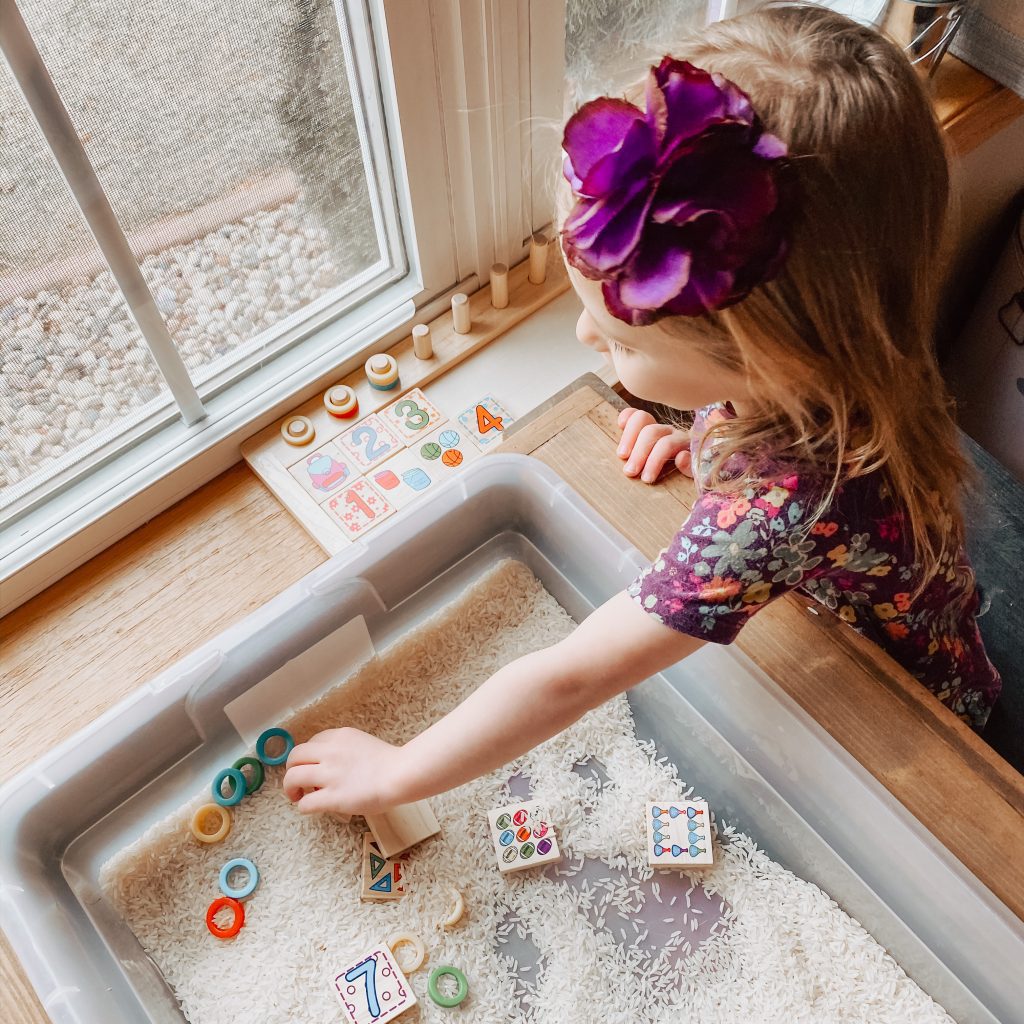
Have the base on the outside of the table with the tiles and rings buried. Have the child pull the items out of the sensory items and place them on the base. This can be an independent play or with a parent support questing and conversing.
Questioning & Communication
Ask them leading questions to get them thinking “what piece should we start with?”, ask them what they just did and why “Why did you put that piece there?”, ask them for more details about that piece, “yes that is six. What did you just count 6 of? What color is that ___. Have you ever seen one of those?” By question and conversing it allows you to get to know their thought process, they get practice explaining their thinking, it makes the thought process use more areas of the brain, it works on communication and social skills, and it makes it personal.
**affiliate links**
Name Puzzles
The place we were taught to start all literacy was the letters of their name. By working with their name, the kids are motivated, have many opportunities to practice with it, and it has relevance to them. Having personalized name puzzles works on all those name skills as well as the fine motor of a puzzle. These can also be letters used to match flash cards, etc, further working on letter knowledge.
Sensory Search
Have the base on the outside of the table with the tiles and rings buried. Have the child pull the items out of the sensory items and place them on the base. This can be an independent play or with a parent support questing and conversing.
**affiliate links**
Take the name puzzles one step further with the whole alphabet. You may also want to purchase more than one set if you want it for spelling with.
Sensory Search
Have the base on the outside of the table with the tiles and rings buried. Have the child pull the items out of the sensory items and place them on the base. This can be an independent play or with a parent support questing and conversing.
Matching
This can be done with parent instruction, independently, or from a sensory bin. Young children typically start with their name, move to letters and numbers, and then move on to sight words. Use objects you have around the house or make your own from index cards. I use puzzles and flash cards as my typical tools.
**affiliate links**
Puzzles
Doing puzzles helps fine motor skills, spatial reasoning, and matching.
Questioning & Communication
Ask them leading questions to get them thinking “what piece should we start with?”, ask them what they just did and why “Why did you put that piece there?”, ask them for more details about that piece, “yes that is six. What did you just count 6 of? What color is that ___. Have you ever seen one of those?” By question and conversing it allows you to get to know their thought process, they get practice explaining their thinking, it makes the thought process use more areas of the brain, it works on communication and social skills, and it makes it personal.
**affiliate links**
Self Check Puzzles
These puzzles are great as they work on academics (alphabet and counting) while allowing them to self check. They do the puzzles on their own and can keep trying until they are successful.
Questioning & Communication
Ask them leading questions to get them thinking “what piece should we start with?”, ask them what they just did and why “Why did you put that piece there?”, ask them for more details about that piece, “yes that is six. What did you just count 6 of? What color is that ___. Have you ever seen one of those?” By question and conversing it allows you to get to know their thought process, they get practice explaining their thinking, it makes the thought process use more areas of the brain, it works on communication and social skills, and it makes it personal.
**affiliate links**
Matching Halves
Children can sit and do these as an activity. Some have self check and some you will have to check after.
Sensory Search
Have the base on the outside of the table with the tiles and rings buried. Have the child pull the items out of the sensory items and place them on the base. This can be an independent play or with a parent support questing and conversing.
Questioning & Communication
Ask them leading questions to get them thinking “what piece should we start with?”, ask them what they just did and why “Why did you put that piece there?”, ask them for more details about that piece, “yes that is six. What did you just count 6 of? What color is that ___. Have you ever seen one of those?” By question and conversing it allows you to get to know their thought process, they get practice explaining their thinking, it makes the thought process use more areas of the brain, it works on communication and social skills, and it makes it personal.
Writing
**affiliate links**
Journaling
It is quite astonishing how early children can begin to journal. As soon as they can start drawing, they are beginning to journal. The general pattern of learning to write is: picture and telling about it, picture and scribbles for writing, picture and beginning to label (initial sound and/or invented spelling), picture and simple sentences, beginning to write and adding detail. You can have your child write to a prompt, write a week summery or something similar no matter the age. That gets them thinking, writing, and working through the process.
You can purchase a journal (composition notebook), find any notebook, or use the back of scrap paper. It doesn’t really matter, what matters is that they are working to write.
**affiliate links**
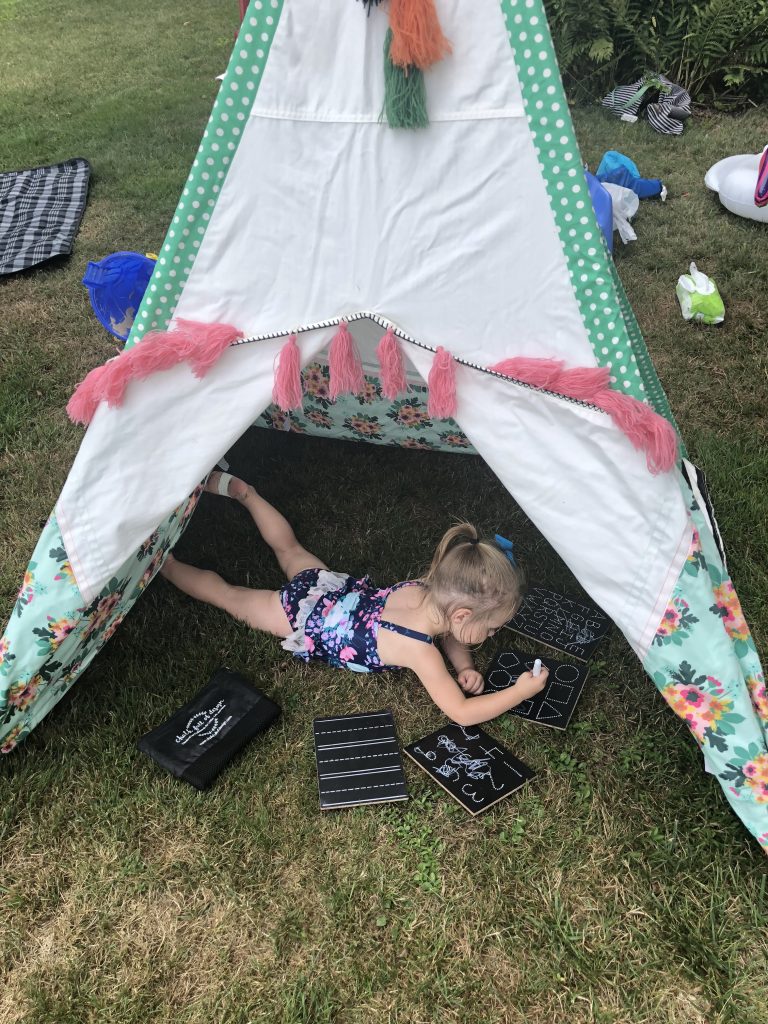
Chalkboards
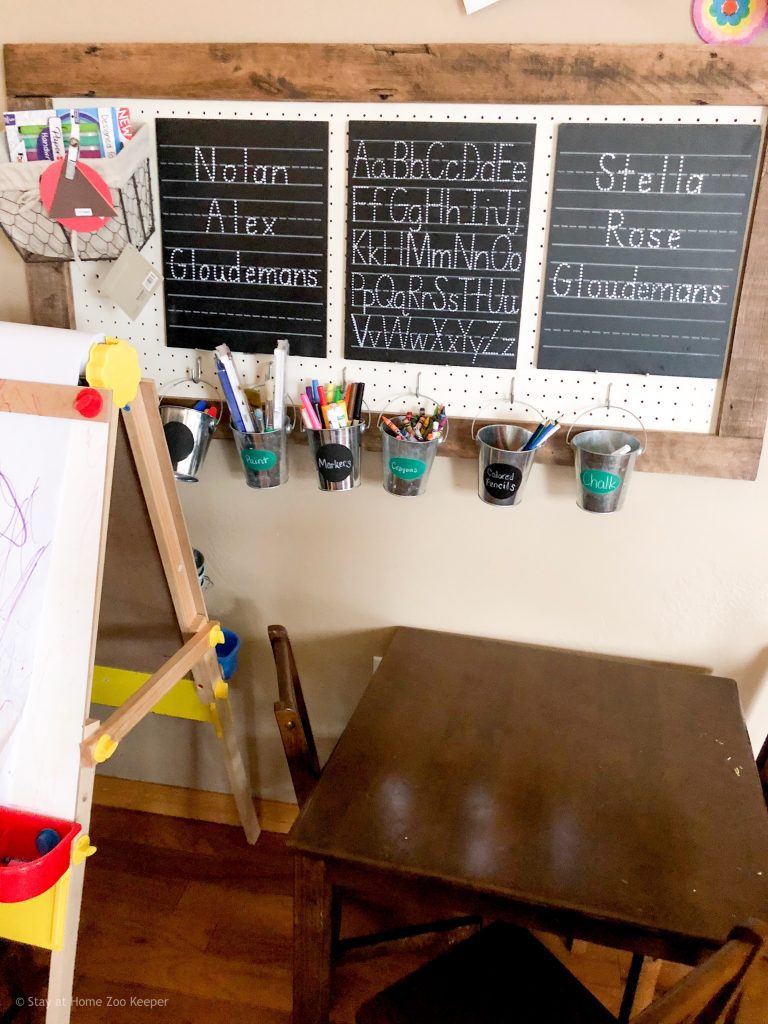
We have loved using ChalkfullofDesign boards to help with our learning. They have boards that can be helpful to many age levels and can be cute to display always.
Tracing
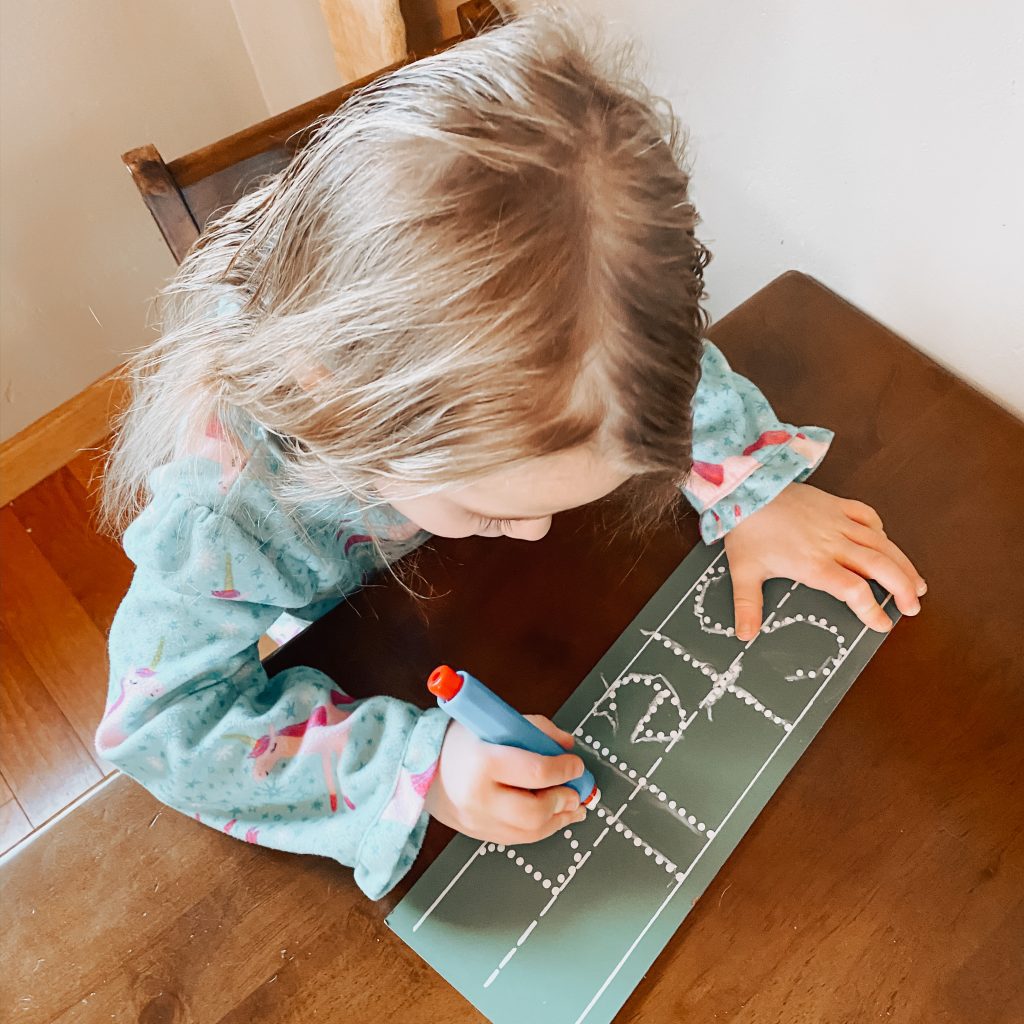
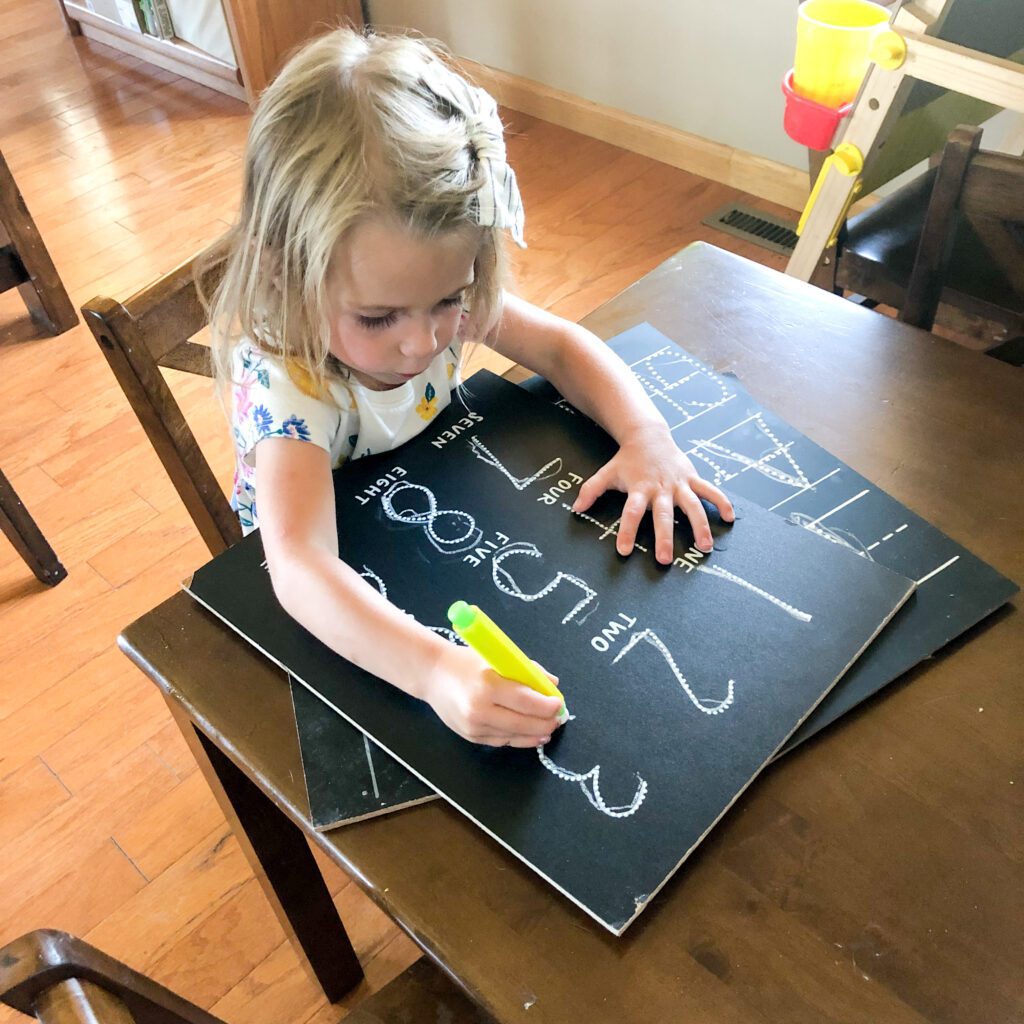
One of the main ways in which one can practice writing and use these chalkboards is to trace them. As mentioned, start with the name, move on to letters, number, and shapes, and then onto sight words.
Matching
The child can match a flash card, puzzle piece or more from another source to their chalk board and then try to write that indicated letter, number, shape, or word.
Find The…
Play a game, like “I Spy” or “find the” As the facilitator, you call out a letter, number, shape, or word, they find it and then trace it. This game uses many parts of the brain.
Story Writing
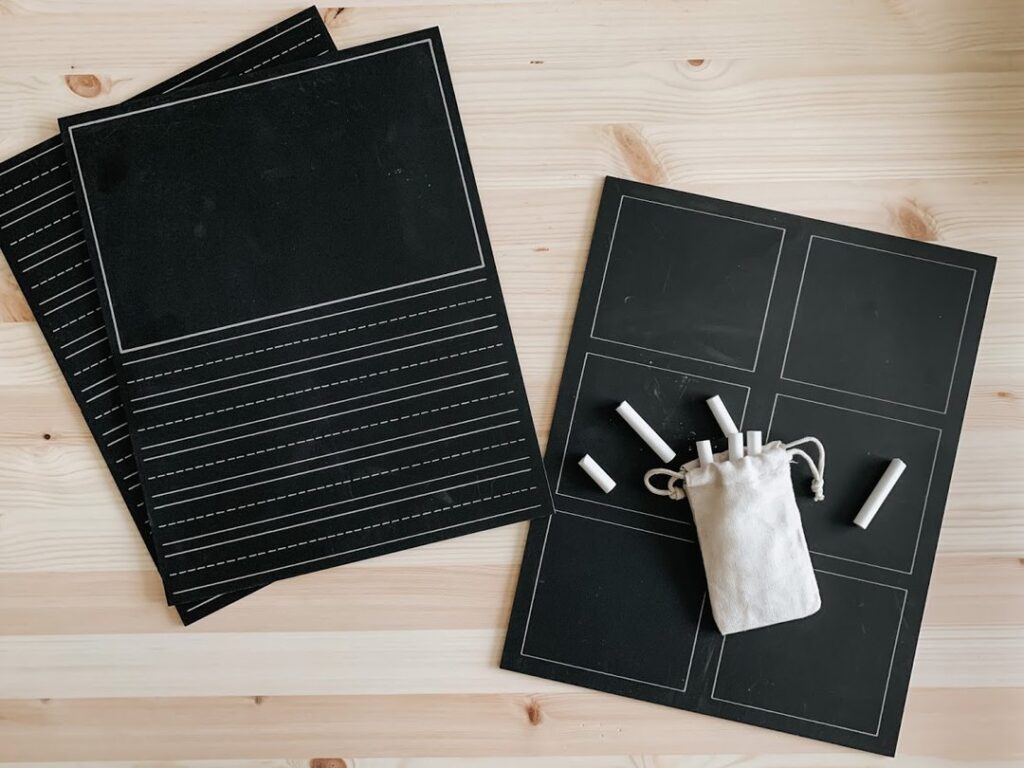
This early writer set helps them set up a story, illustrate and then write the story (or label the picture), and then eventually write a story.


**affiliate links**
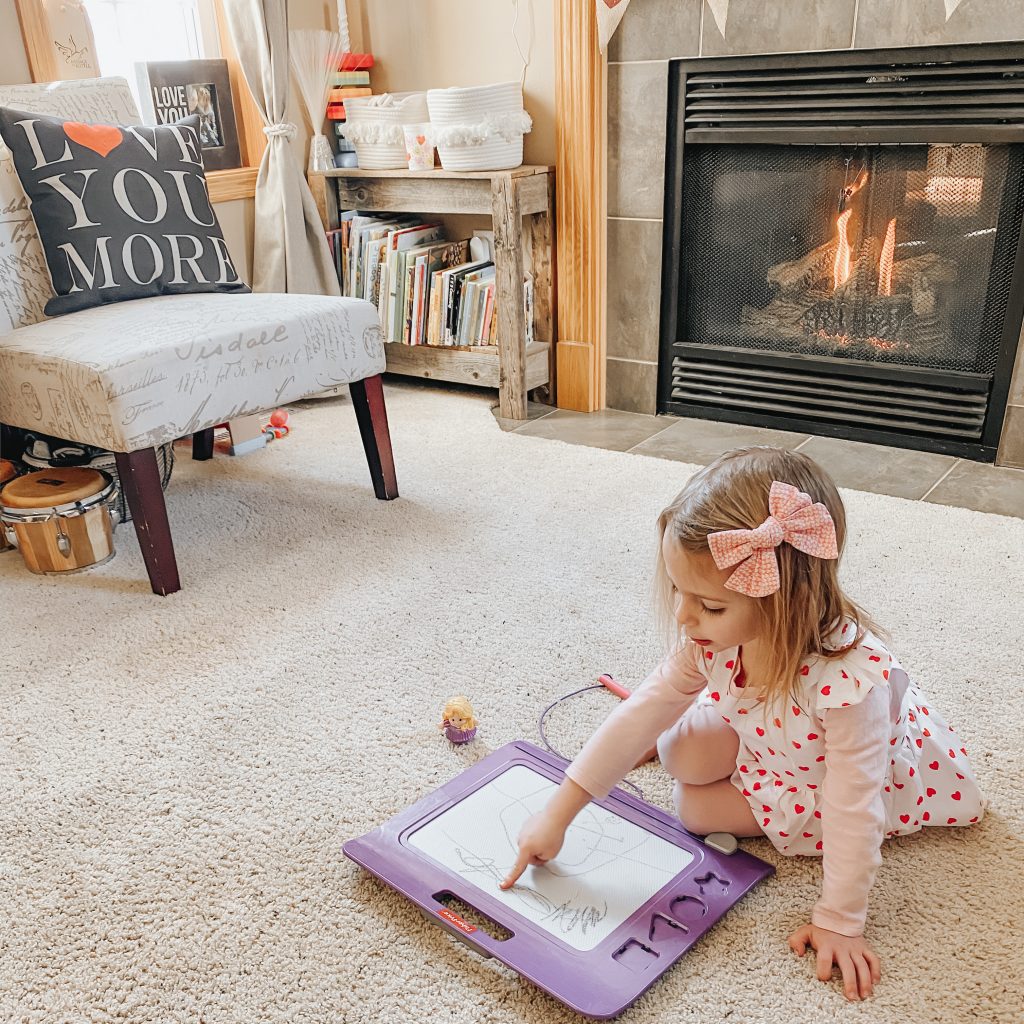
Story
Have the child draw something first. They encourage them to either label parts of the picture or begin writing what it is about. Invented spelling (writing it phonetically) is more important than correctly. Writing starts as scribbling left to right, what is important is they can tell you “what it says”
Write this
Hold up a flash cards, puzzle pieces, an object, etc and have them write it (or initial sound) on their board. Make it fun and “hold it up when you are done so I can see it tall and proud!”
**affiliate links**
Pencil/Finger Writing in sand
Writing in the sand makes the writing more of a sensory experience. The sensory triggers different parts of the brain and helps kid remember it. It is also a different and more fun experience.
Write this
Hold up a flash cards, puzzle pieces, an object, etc and have them write it (or initial sound) on their board.
**affiliate links**
Trace it out
Trace the letters with a finger or the tool. The tracks helps develop muscle memory while also giving a sensory feel of the drag. This helps kids practice and develop a muscle memory for the letters.
Fill it up
The child fills up the letter (still in the correct formation, start at the top always) and writes it with the small objects.
**affiliate links**
Trace it out
Trace the letters with a finger or the tool. The tracks helps develop muscle memory while also giving a sensory feel of the drag. This helps kids practice and develop a muscle memory for the letters.
**affiliate links**
Parent resource
This can be a resource for parents to see the “correct formation” of the letters as well as some work ideas. It can also be a parent’s assessment of what they are able to do and what they need to work on yet.
Fill out the activity book
Some children are motivated by activity books. Some learn it in all the play ways mentioned above and like to show off what they learned.
Flash Cards
Hear me out. Flash cards can be used in MANY ways besides the traditional way. I am going to list some of our top flashcards and then highlight some activities. I also encourage you to also laminate these if they are going to get a lot of use as they will get some wear and tear.
**affiliate links**
Kindergarten ToolKit offers everything from flash cards to lesson plans. I have loved their page! Their flashcards are the ones we have.
**affiliate links**
Matching
This can be done with parent instruction, independently, or from a sensory bin. Young children typically start with their name, move to letters and numbers, and then move on to sight words. Use objects you have around the house or make your own from index cards. I use puzzles and flash cards as my typical tools.


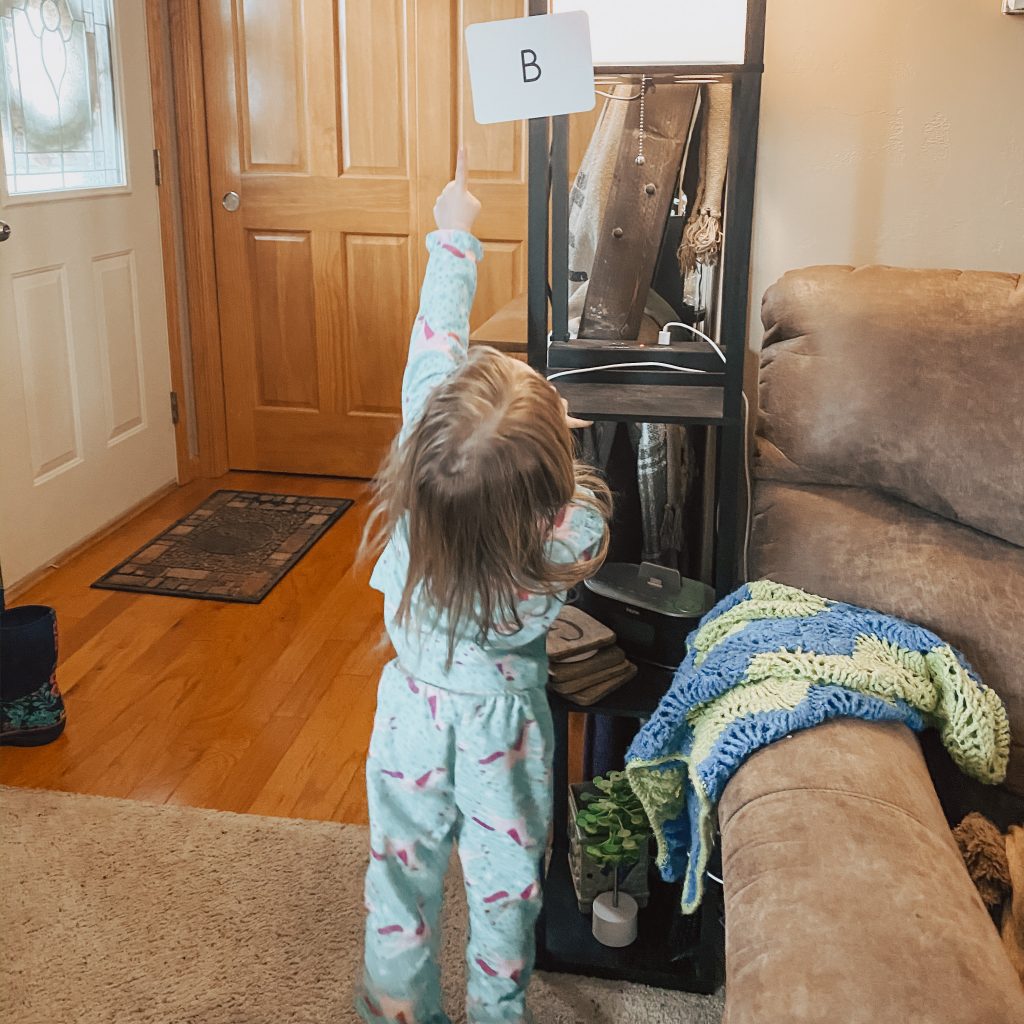
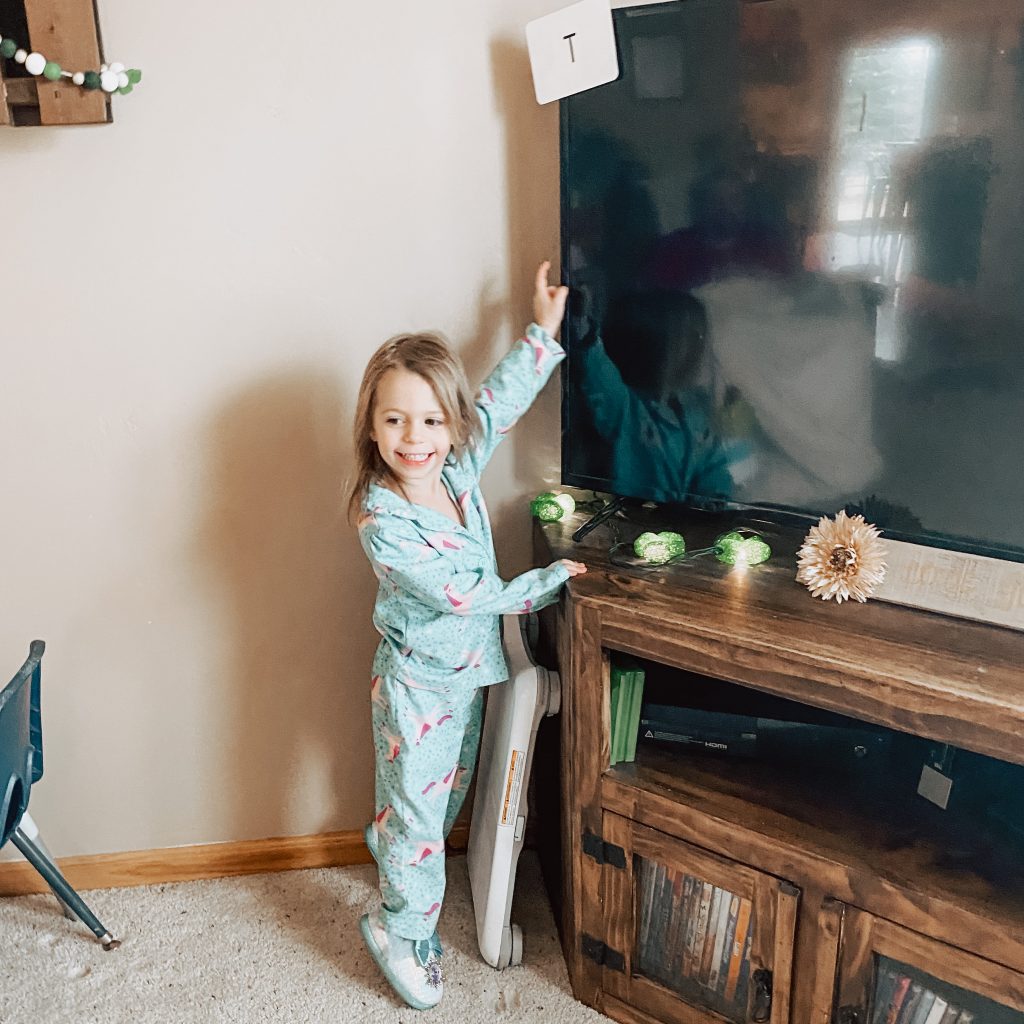
Search the house
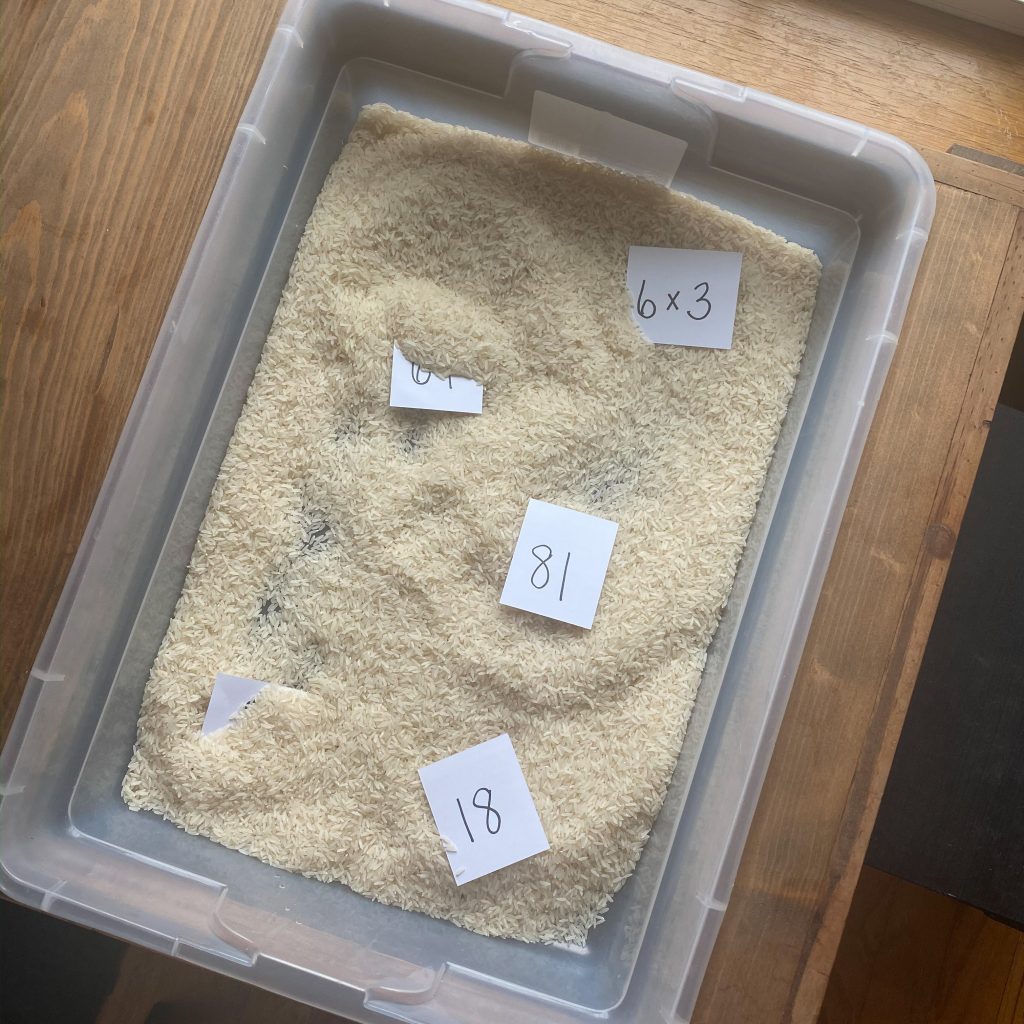
This game gets kids up and moving and can be done with literally any subject area. Parents put the answers all over the house and then call out the question or what they are searching for. EX: Find the B! Find the capital of Wisconsin! 4×4! Kids then have to run through the house to find the answer and point it out. These can be made from flash cards pre-made or just make your own with index cards
Sensory Bin Search
Bury the flashcards in a sensory bin and call out or have a board for matching for them. Have them dig then out and declare its name. The reading and then saying is a great content builder (it helps them remember)
Art
**affiliate links**
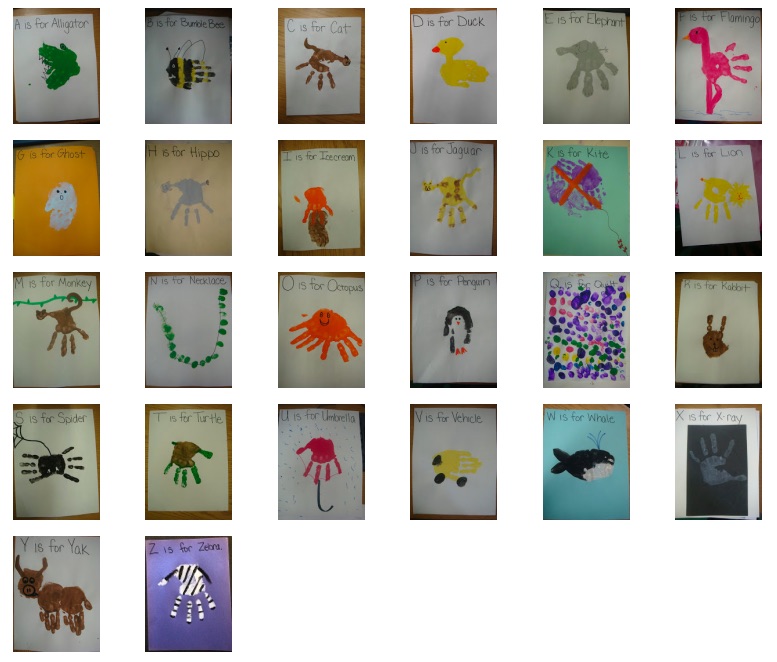
Make an alphabet book
For younger kids, you can make an alphabet book with things around the house or their handprints! The template I used when teaching is available HERE. The how to of all the handprints and footprints is available HERE.
Free Art
Children learn self expression, fine motor skills, color mixing, and more with free art. Art can be messy (why I included a waterproof mat to put underneath)
Math
**affiliate links**
Sorting
Sort by colors. Expand by counting how many of each color. Works fine motor as well as math skills.
Patterning
Start a pattern with bears and have the children continue it.
- ABA
- Red, Blue, Red…
- AABB
- Red, red, blue, blue…
- ABC
- Red, blue, green…
- ABBA
- Red, blue, blue, red…
**affiliate links**
Roll the dice
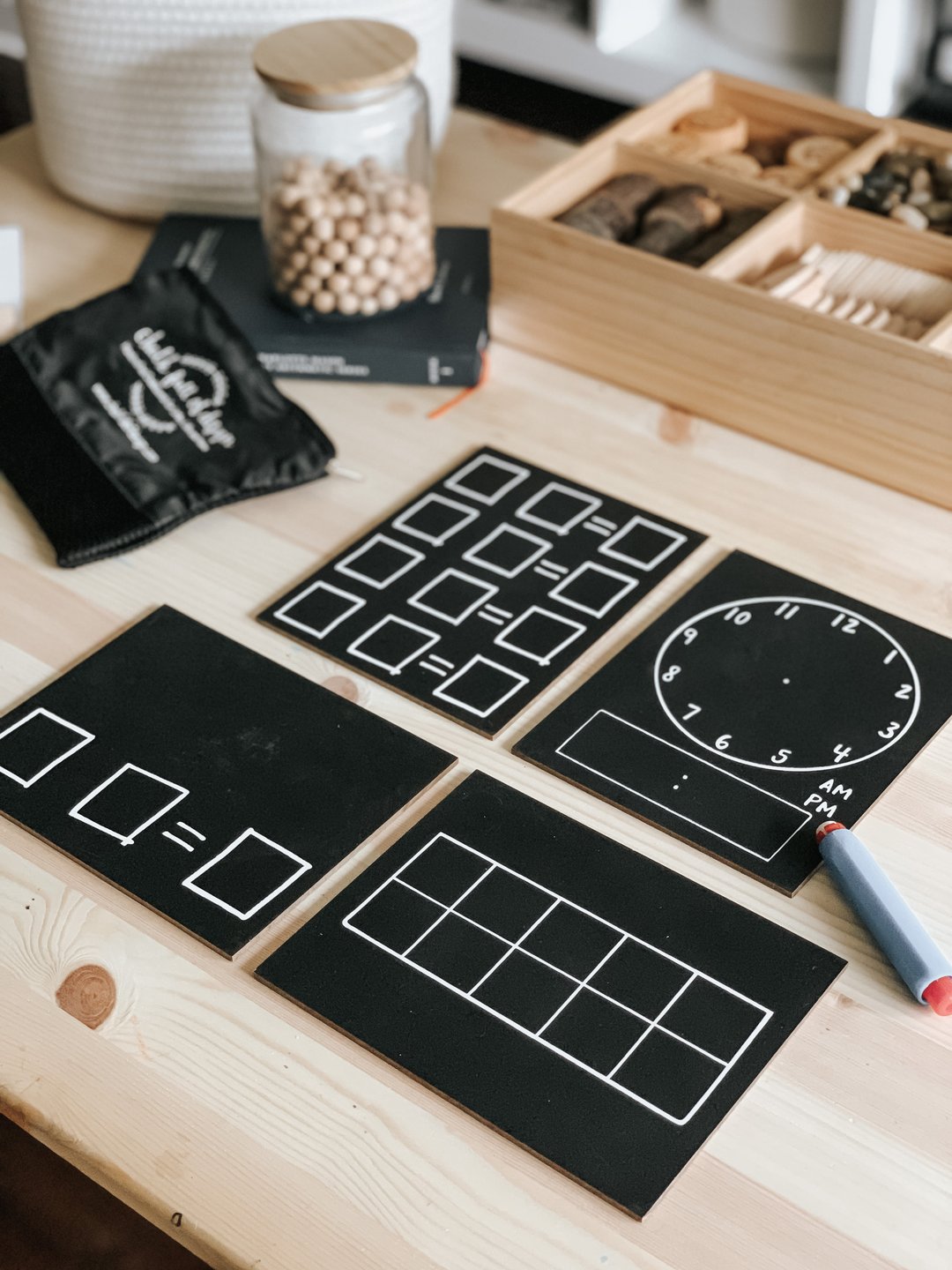
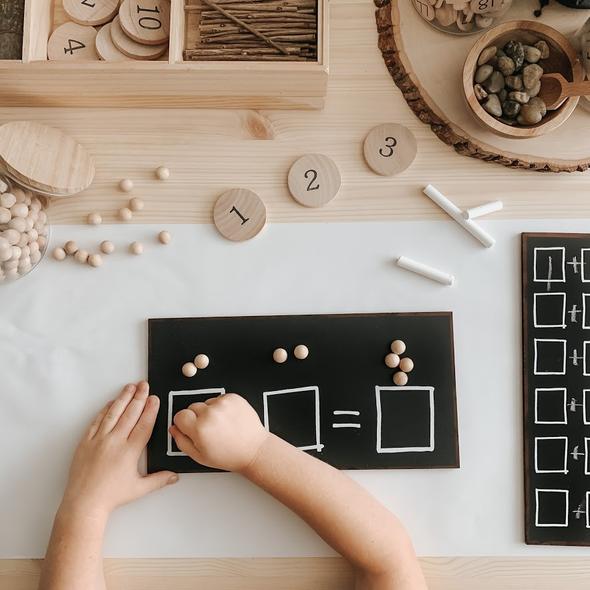
Roll a dice for the first box, write it in the box. Roll a dice, write in the second box. Complete the equation. You can record all your progress on the multi equation board.
Count and equation
Using beads, small erasers, teddy bears, beans, etc place a couple. Count, write the number. repeat. Complete the equation. You can record all your progress on the multi equation board.
Fill the 10 frame
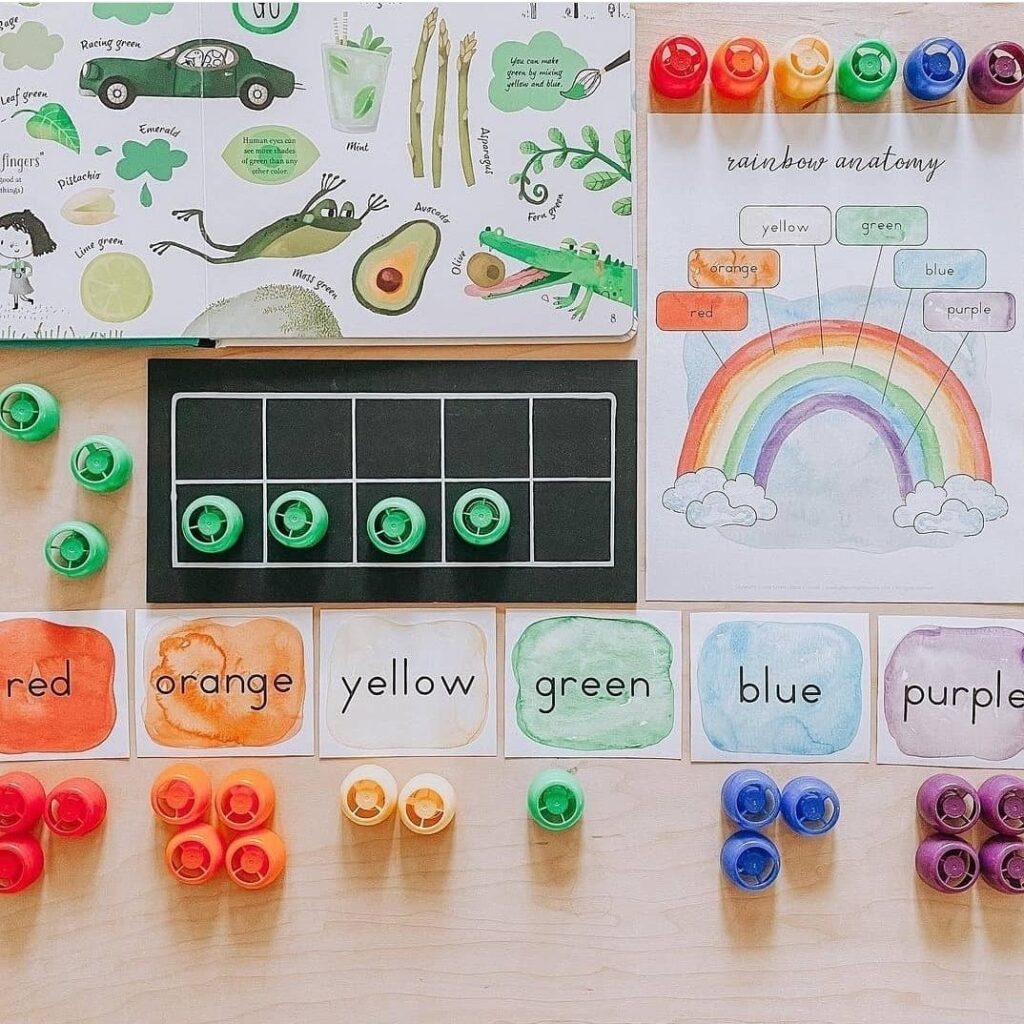
Find ways to make 10 with 2 color objects (example the bears).
- 1+9
- 2+8,
- 3+7
- 4+6
- 5+5
- 6+4
- 7+3
- 2+8
- 9+1
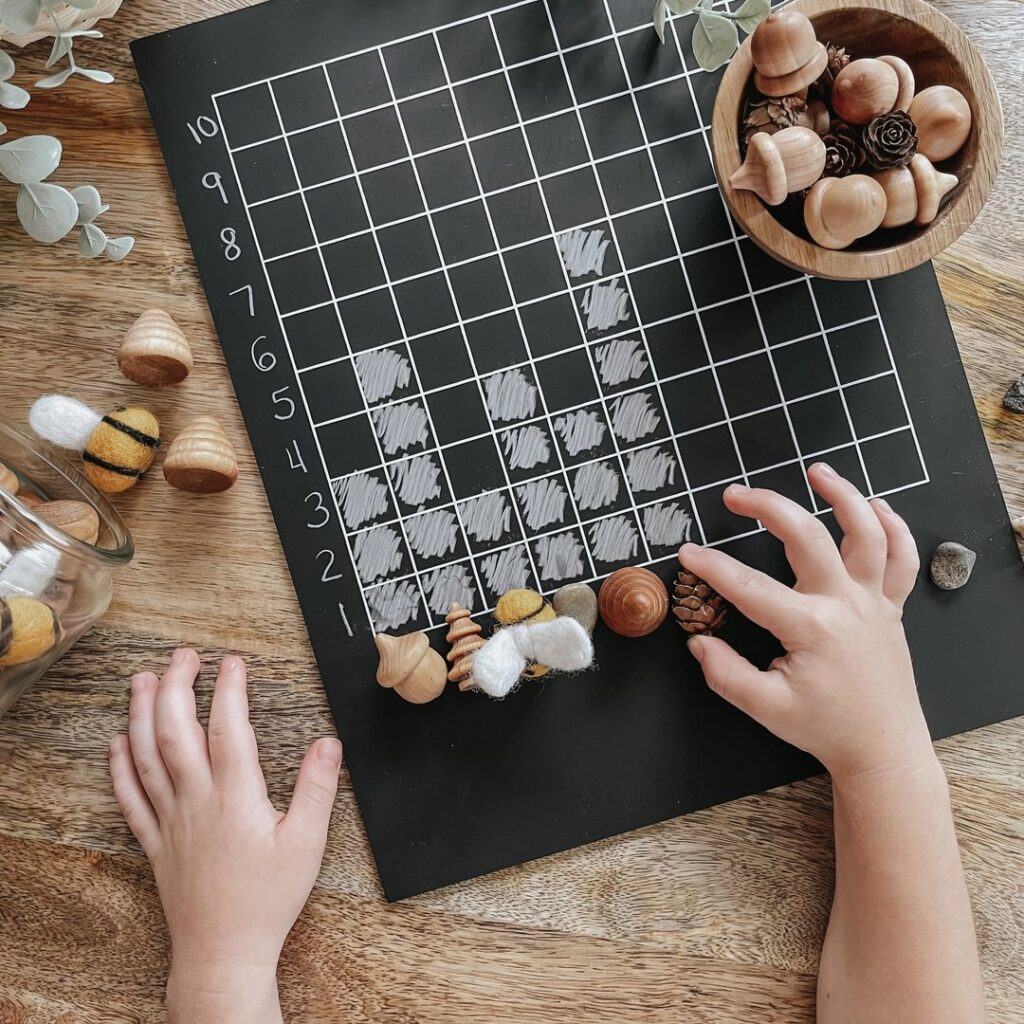
Write the 100 frame
- Write the numbers you learn and work on 1-100
- Find the patterns (the bottom one always ends in 0, the top always ends in 1, the first number goes up one in each line) This helps develop a true number sense
- Play “find the” on a filled out board (maybe erase it when you find it to make it more tricky!)
Graph
Using the 100 board, you can graph things like colors of bears, things you see on a nature hike, color cars that drive by and more!
**affiliate links**
Line up, then fill out
Line all the number cards up in order and then work on counting as you fill each one up.
Blind fill out
Have the child flip all the numbers over so the back side is up. Then mix up. Have them flip, name, and then count as they put the pegs in.
Sensory Search
Have the base on the outside of the table with the tiles and rings buried. Have the child pull the items out of the sensory items and place them on the base. This can be an independent play or with a parent support questing and conversing.
Science
**affiliate links**
Journaling
It is quite astonishing how early children can begin to journal–as much as this can be a writing activity, it can be a science. As soon as they can start drawing, they are beginning to journal. The general pattern of learning to write is: picture and telling about it, picture and scribbles for writing, picture and beginning to label (initial sound and/or invented spelling), picture and simple sentences, beginning to write and adding detail. You can have your child write to a prompt, write a week summery or something similar no matter the age. That gets them thinking, writing, and working through the process.
Science things to journal:
- weather
- observations in nature
- plant growth
- gardening
- life cycle (birds nests, insects, farm trips, etc)
**affiliate links**
Explore
A great part of science is it is a part of our life. With early childhood it is making observations, noticing patterns, and just taking in the beauty of our world. there can be kits that can help you explore but there are so many things you can just find at home that will to the same job.
Observations
As you explore make observations of what you see. You can question and converse about your observations, right htem down, graph them, draw them, zoom call a friend about them and more! The skill of observing and communicating is key in the scientific process as well as a social skill.
**affiliate links**
Manipulate, lay out
There are some really fun science toys you can use to learn about science as well as use to make normal life science.
Sensory Search
Have the base on the outside of the table with the tiles and rings buried. Have the child pull the items out of the sensory items and place them on the base, creating the cycle. Use the tweezers to bring in fine motor as well as a scientific discovery. This can be an independent play or with a parent support questing and conversing.
Dramatic Play
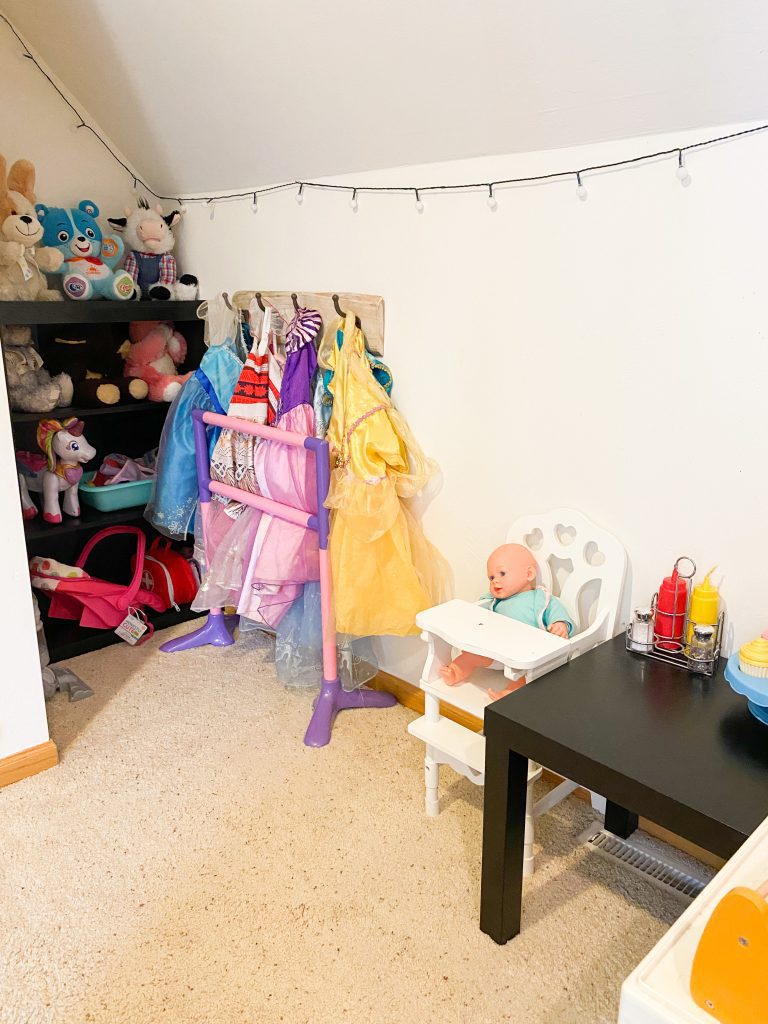
Dramatic play can bring in a lot of learning. Social skills, math (one to one when setting a table or getting everyone a cup), math: how many do we need?, language skills, writing skills (menus, doctors notes, orders, etc) and more. Dramatic play should be a play part of learning in all children’s lives.
**affiliate links**
`Ideas to play
Play can be done with an adult (questioning and conversing) or independent. Both develop strong skills for the child. I love wood toys as they last forever, Green Toys recycles materials, Plan toys is another great eco friendly toy, Little people are plastic but they are great as no choking hazards and SO MANY opportunities for imaginative play/role playing.
- family
- restaurant
- doctor
- vet
- store
- dress up
- camping trip
- Doll house
- Community helpers
- flower shop
Blocks/Building
Building blocks teaches spacial awareness, fine motor skills, cause and effect, balance, design, and more. Blocks are a great tool to have as a party of learning.
**affiliate links**
Reading
Children should read or be read to daily. Reading will help expand their knowledge in the theme you picked or just help improve their reading, comprehension, listening, vocabulary, and more.
As an Usborne Books & More consultant, I have many many books to recommend on any topic. I have my page linked if you would like to browse or you can comment, email, message and I can make a personal list for you! If you shop, choose StayatHomeZooKeeper as the party 🙂
**affiliate links**
Sensory
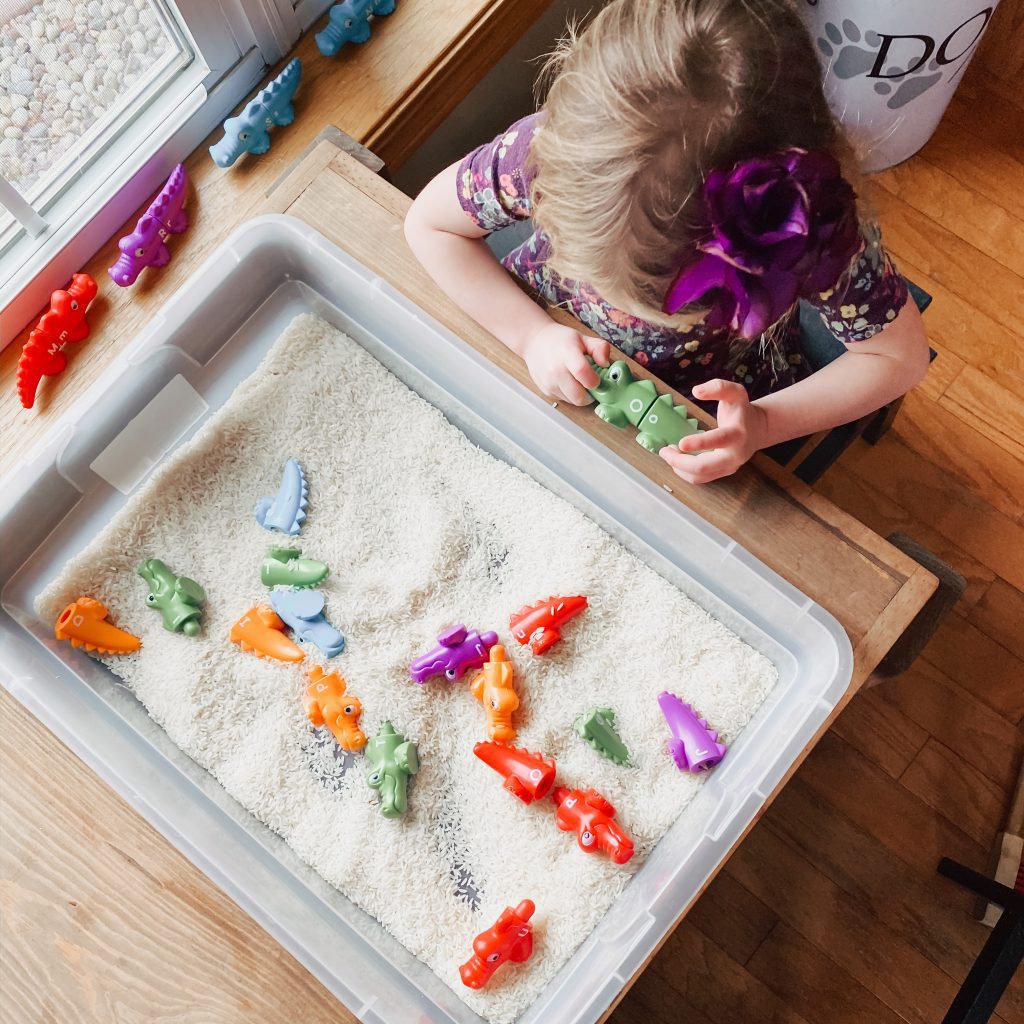
In sensory bins with small objects, you can bury two part activities to meet your kids level and take learning up a notch. This has been mentioned with a lot of toys in a sensory search.
This can also be science experiments where you make it then play with it, talk about states of matter, cause and effect, and more.
**affiliate links**
Sensory Bin Items
Technology
Technology has a time and place in home. There are some great learning tools using technology. Technology will be a part of your child’s life so teaching a healthy relationship and boundaries with it can also be part of the learning process.
**affiliate links**
Alphabet Mat
**affiliate links**
You need to have a fire tablet(8th Gen Fire HD 8, 9th Gen Fire 7, and 9th Gen Fire HD 10. Compatible with the Fire HD 8 10th Gen (2020) & Fire HD 10 11th (2021), requires the reflector adapter, sold separately.), or an iPad (All iPads except Generation 1, 2, 3. iPad Reflector 2021 required for the: iPad Air 4, iPad Pro 11-inch & iPad Pro 12.9-inch. The minimum iOS version needed is iOS 10.)
Osmo beginner pack, letters game
These are great on letter name, letter formation, imagination, story telling, and gets them thinking when it describes what they need for a costume our story adventure. Very cool product and I think a great tools for adding into physical toys.
Osmo princess/creative
These allow them to work on drawing, fine motor, and pencil grip. They are add on games and you need to have the osmo system in order to use them.
If you have made it this far, I hope you found what you are looking for! Please feel free to comment or contact for more ideas! You can also find pinned items on my Pinterest page.

You May Also Like
Depression

Registering: For your first child and every child after